When floods strike, they develop quickly, leaving you very little time for critical decision-making. So, all homeowners should have a flood response plan established to enable them to take quick and organized action when flooding occurs. This is particularly important if you reside within a high-risk flood zone. The preparation that a flood response plan brings can mean the difference between a minor water intrusion in your home and catastrophic damage and loss. To help you navigate developing a proper and thorough flood response plan, the team of dewatering experts at Mersino has compiled comprehensive information and tips surrounding flood response plans.
What is a Flood Response Plan?
A flood response plan is essentially your strategy and action plan for when flooding occurs at your home. It is a document that outlines specific steps and actions to take in order to protect life and minimize potential property damage. A flood response plan should be tailored to your household’s circumstances and needs to further ensure that everyone in the home knows their role should an emergency occur.
Key Components of a Flood Response Plan
While a flood response plan should be customized to best suit your household, there are a few elements that should be included within all plans. While this list is not necessarily all-inclusive, we recommend that you include the following:
- A list of emergency contacts
- Waterproof storage for important documents
- Designated evacuation routes with any alternatives, if possible
- Designated meeting points should the members of your household be separated
- Clearly marked locations where utilities can be shut off
- Emergency supply kits and a clear description of where they are kept
- Photographed home inventory for insurance purposes
Key Precautions to Keep Your Home Safe During a Flood
Homeowners can significantly reduce flood damage through a combination of structural modifications, maintenance, and planning, such as:
- Purchasing or reviewing flood insurance
- Improving your yard’s landscaping to better manage runoff (green spaces, grading, drainage)
- Raising and anchoring outdoor utilities (HVAC units, fuel tanks, electrical systems)
- Sealing foundation and basement walls
- Installing a sump pump
- Adding drain plugs to basement floor drains and installing sewer backflow valves
What to Do During a Flood
When flooding is actively happening, immediately move to the highest level of your home. Avoid sealed attics without roof access, as these can become deadly traps as water rises. Never walk, wade, or drive through floodwaters.
Shut off electricity at the main breaker and gas at the meter only if they are reachable without water contact, as electrified floodwater is fatal. Monitor emergency broadcasts continuously and evacuate immediately when ordered, using designated routes. If trapped, move to the highest point, signal for help with bright fabric from windows or the roof, and call 911 only for life-threatening emergencies.
Keep family together, avoid contact with contaminated floodwater, and never touch electrical equipment or downed power lines. When choosing between protecting property and ensuring safety, always evacuate. Possessions are replaceable, lives are not.
What to Do After a Flood
Once authorities have confirmed that it’s safe to return to your home, begin thoroughly documenting all damage caused by the flood before touching/moving anything. We recommend taking photos or videos for easier reference. This step is critical for insurance claims.
Examine the structural integrity of your home before entering. If there are severe cracks in the foundation, warped walls, or sagging rooflines, it may not be safe to enter. Contact a professional who can determine whether it is safe to go inside. If you are safe to enter your home, immediately open windows and doors to better ventilate the house and help prevent mold. Be sure to wear protective gear, like gloves, masks, and rubber boots, as floodwaters are hazardous. Discard any consumables that came into contact with the floodwater. From there, connect with professionals who can safely pump the floodwater out of your home.
Dewatering and Professional Flood Recovery
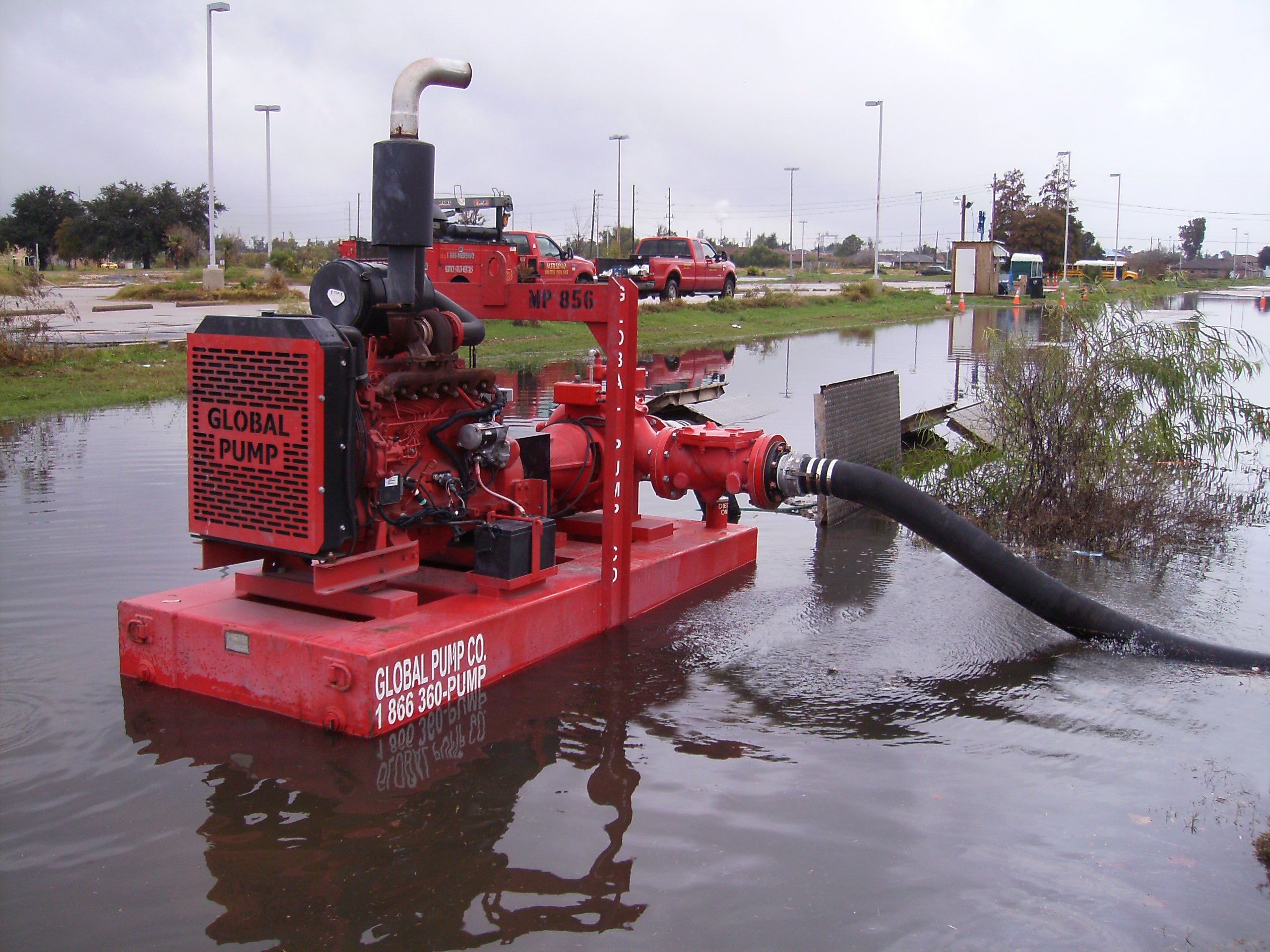
Dewatering is the process of removing standing water from flooded structures, basements, construction sites, and other large-scale properties using specialized water pumps and equipment. While homeowners can address minor water build-up with small pumps, significant flooding requires industrial-scale solutions to prevent further damage and accelerate recovery. Mersino provides comprehensive dewatering services designed for large-scale operations, deploying high-capacity pumps, filtration systems, and water management strategies that handle millions of gallons efficiently. Our expertise extends beyond simple water removal to include contaminated water treatment, sediment control, and coordinated discharge that complies with environmental regulations.
Contact Mersino for Emergency Flood Relief
Mersino offers 24/7 emergency support, ensuring rapid response when every hour counts in preventing secondary damage like mold growth, structural deterioration, and contamination spread. Our teams mobilize quickly with industrial equipment capable of managing flood scenarios that overwhelm standard restoration companies. Additionally, Mersino offers industrial generators, available for both purchasing and renting, that restore power to critical systems during extended outages, enabling dewatering operations, ventilation, and dehumidification even when utility infrastructure remains compromised. Our comprehensive approach addresses the full spectrum of flood recovery needs, from initial water extraction through complete site restoration, making it an essential resource for those facing extensive flood damage.

