What is a Wellpoint Dewatering System?
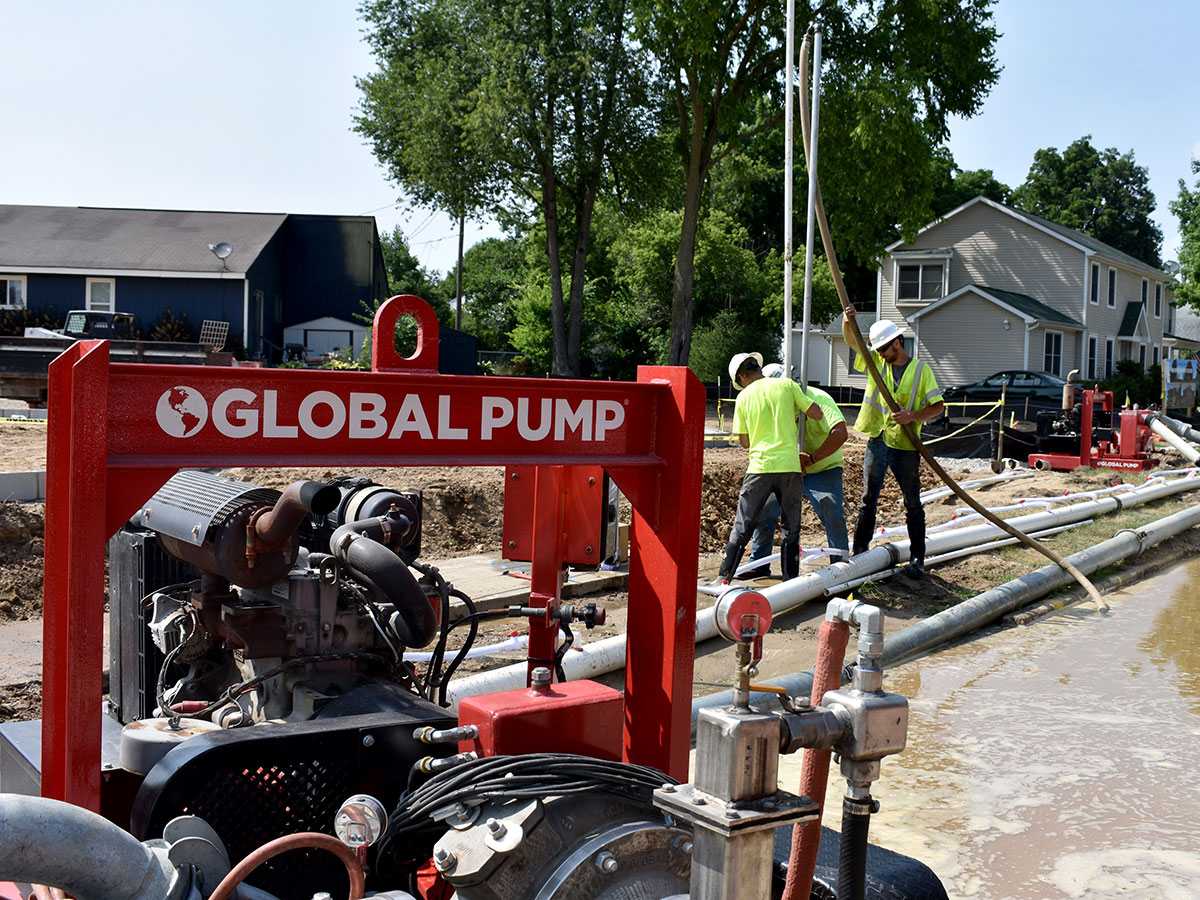
A wellpoint dewatering system uses closely placed wellpoints (essentially, shallow wells) surrounding an excavation site to draw water out of the ground. The small-diameter wellpoints are installed to the appropriate project depth (usually no more than 20 feet deep), connected to a header pipe, and work together to draw water out of the ground when the system begins pumping.
What is Sock Tile Trenching?
Sock tile trenching, or horizontal or sock drain dewatering, involves burying a perforated, corrugated pipe, oriented horizontally, deep underground (usually around 18 feet). The pipe is wrapped in a “sock,” which is a fabric filter, allowing groundwater to seep into the pipe while keeping dirt and other materials out of the pipe. The header and the tail of the pipe come up out of the ground, allowing them to be hooked to a pump to remove the captured groundwater.
Key Differences
Both types of dewatering lead to the same result: a dry, stable work area. But which is best for your project? It depends on several factors, including where you are, the type of soil, groundwater conditions, the size of the project, and any site constraints. Determining which dewatering method is best for you comes down to the key differences between wellpoint dewatering systems and sock tile trenching:
Installation and Key Components
For wellpoint system dewatering, wellpoints are installed along the perimeter of the excavation area using auguring methods. Each wellpoint has a small diameter (the largest wellpoints might reach four inches in diameter) and includes a screen to filter out soil while allowing water in. The wellpoints are spaced closely and evenly and are connected to a dewatering pump, which draws water out of the ground.
Sock tile trenching installation involves trenching or directional drilling to allow the socks to be buried horizontally underground. Often installed around 18 feet deep, the corrugated, perforated pipes are often as much as 500 feet long, with each end connected to dewatering pumps that pull out the groundwater.
Common Uses and Applications
Wellpoint dewatering systems are most often used in foundation construction, utility trenching projects, underground parking garages, roadwork, pipeline installation, and in areas with existing underground utilities.
Sock tile trenching is commonly used in pond and pool construction and excavation, waterfront developments, mining, and other projects with a large piece of land that needs to be dewatered. Like wellpoints, sock tile trenching is also used in foundation construction, utility trenching, and pipeline installation.
Which Dewatering System is Best for You?
When groundwater levels are close to the surface, wellpoint dewatering systems are often the best solution. In sandy or silty soils and shallow excavations, wellpoints are able to easily draw groundwater out and direct it away from the site to create stability.
For projects with large surface areas or needing to bear heavy structures, sock tile trenching is ideal as the speed of the dewatering allows soils to consolidate and increase the bearing capacity of the round. The ability to quickly trench and install extremely long pipes is especially favorable on larger projects.
Of course, every project is unique, so it’s important to understand all the details of what you’re doing and where you’re doing it to determine the best water solutions. We have the experience and expertise to guide you through that process.
Connect with Mersino for Dewatering Solutions
Contact us today to start the conversation or explore Mersino’s case studies to learn how you can rely on Mersino for efficient dewatering solutions.

